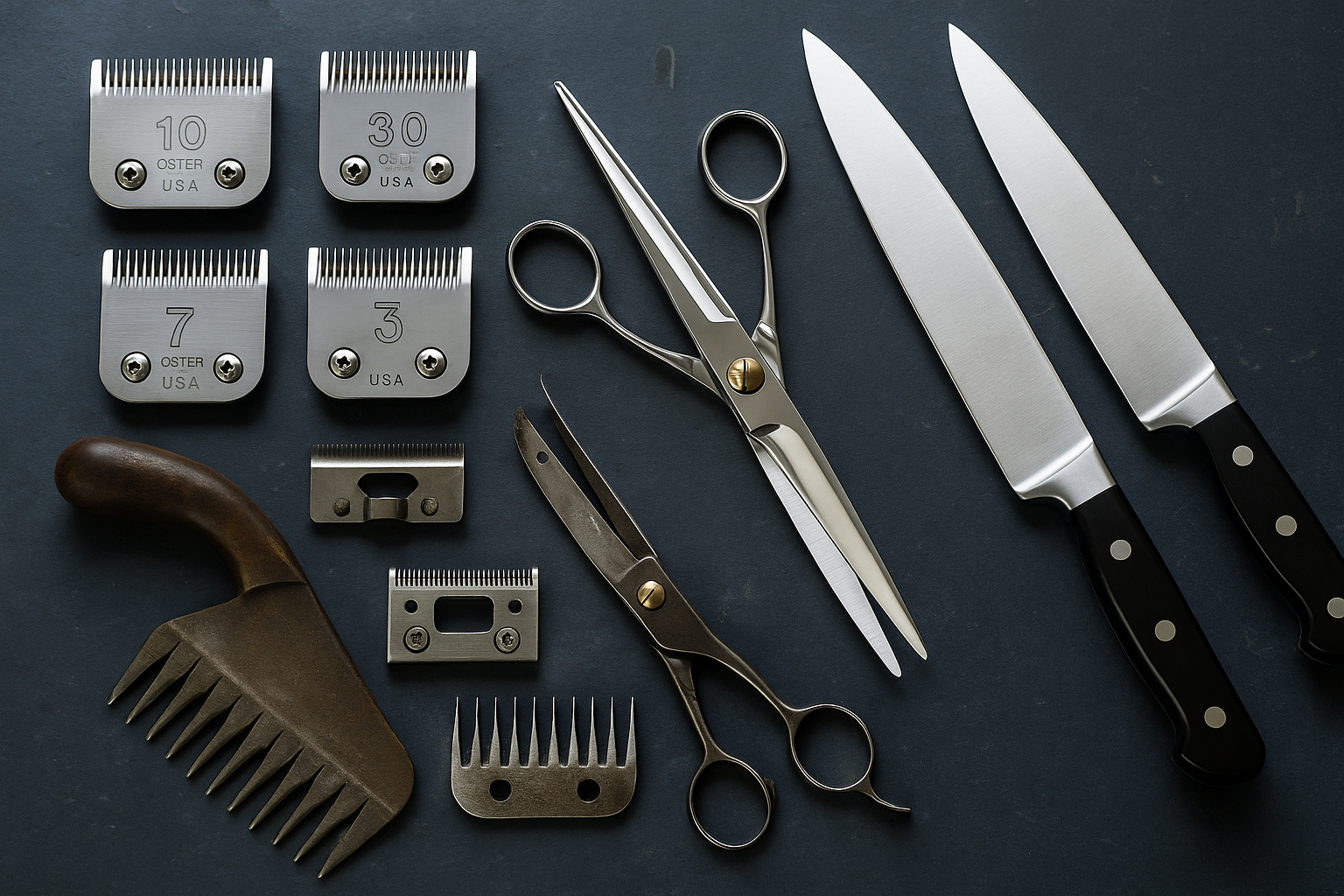
Every shearing contractor in Australia knows the feeling. Season starts, you're flat out from before sunup until well after dark, and suddenly you realise the kit you should have prepared in the autumn is now bottlenecking your stand rate. Combs that should have been sharpened three weeks ago are still in the box. Cutters that needed replacing got pressed into service anyway. Half the team is sharing one good handpiece because the other has rough gears.
This guide is the pre-season checklist that prevents that scramble. It covers combs and cutters, handpieces, downtubes, the logistics of bulk sharpening, and a working rotation system for in-season maintenance.
The pre-season window
Most Australian shearing seasons in 2026 break into a few key windows depending on region:
- Crutching: late winter to early spring across most of Australia (July-September)
- Main shearing season: October to December for southern flocks, March to June for some northern flocks, with regional variation
- Lambs and second-shear: continuing into autumn depending on management style
The sharpening window is 4 to 8 weeks before each season. That's enough time to send a batch in, get it back, identify replacement needs, and order new gear if anything's missing. Leave it later than 4 weeks and you risk overlapping with the late-arrivals from other contractors who left it later than they should have. Workshop turnarounds get tighter as the season approaches.
Combs and cutters: the audit
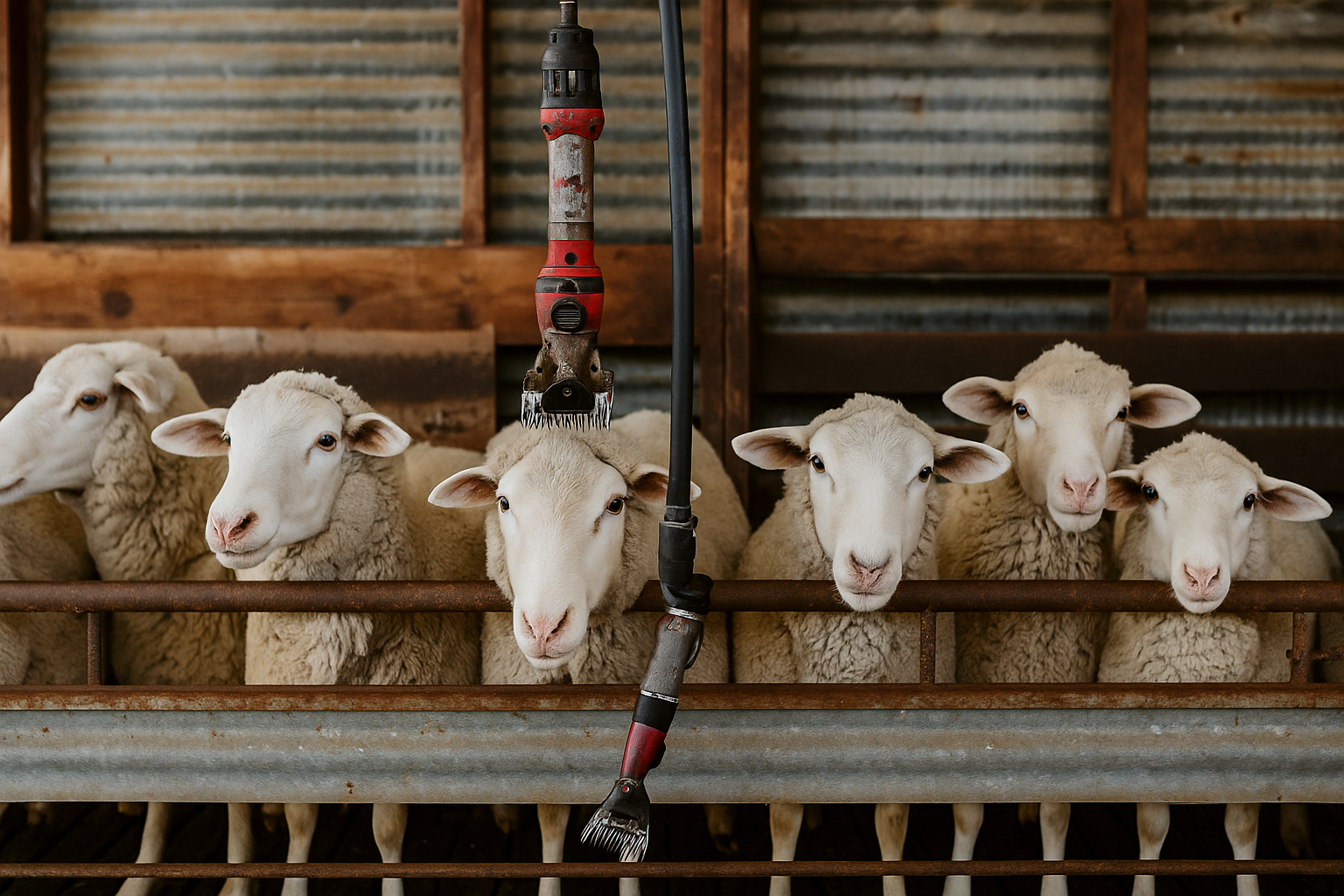
Start with a complete inventory. Open every cutter case, count combs, sort by condition. The audit takes longer than you think but it's the difference between a clean season and a chaotic one.
The four-pile system
Sort everything into four piles:
- Working sharp: in usable condition, ready for season
- Needs sharpening: dulled but fundamentally sound, will restore
- Needs replacement: broken teeth, severe wear, beyond restoration
- Unsure: send a photo to a sharpener for assessment, or set aside for the workshop to evaluate
Most professional shearing kits we see come back with somewhere between 60 and 80 percent in the "needs sharpening" pile, 15 to 30 percent already sharp from the previous season, and 5 to 15 percent needing replacement. If your replacement pile is bigger than that, the gear was probably run too hard the previous season.
Quantity check
Calculate working numbers based on your team size and expected stand count:
- Each shearer typically uses 6 to 12 combs and 2 to 4 cutters per day depending on flock condition
- Add a 25 percent buffer for breakages, lost gear, and unexpected demand
- Multiply across team size and expected days
If you're 30 percent under that target, order new gear now. Waiting until mid-season means paying premium prices and potentially being out of stock during peak demand.
Handpieces: the maintenance you can do yourself
Most handpiece issues are preventable with offseason service. Walk through this checklist for every handpiece in your kit:
Gear box and bearings
- Run the handpiece without a comb. Listen for grinding, knocking, or unusual whine
- Smooth, consistent operation means the gear box is sound
- Rough or noisy operation typically means worn bearings or contaminated grease
- Send rough handpieces for service before season; mid-season repair costs more and takes longer
Tension and friction
- Fit a known-good comb and cutter. Test the contact pressure
- The cutter should ride evenly across the comb with no daylight at any contact point
- Adjust the friction and tension as needed
- If the cutter holder is worn, replacement is straightforward and worth doing now
The fork and bearing assembly
- Check the fork for hairline cracks, especially at the pivot points
- Lubricate per the manufacturer's specification
- Replace the fork bearing if it's worn smooth or cracked
Downtubes and drives
This is the system that's most often neglected and most likely to fail mid-season at the worst possible moment.
- Check the downtube for cracks, especially around the joints and at the lower end where stress concentrates
- Test flexibility and response. A downtube that has gone stiff or has dead spots will cost you efficiency every stand, every day
- Lubricate per manufacturer's specification
- Have at least one spare downtube ready to swap in mid-shed if something fails
Bulk sharpening: how to send gear in efficiently
For a working contractor with 50+ combs and cutters to sharpen, batch shipping is the only sensible approach.
Pre-season bulk order
- Send 4 to 6 weeks before your season starts
- Bulk orders of 50+ items get an automatic 15 percent discount
- Same 2-3 day workshop turnaround on bulk as on small orders
- Free Express Post return on orders over $100
How to package shearing gear
- Separate combs from cutters; they damage each other in transit
- Wrap combs in newsprint or bubble wrap, lay flat in the box
- Stack cutters in their original cases or wrap individually
- Use a sturdy cardboard box, not a soft mailer; combs can puncture padded envelopes
- Include a clear note inside: contractor name, contact phone, count of combs and cutters, and any specific instructions
- For full details, see our how to post blades safely guide
Keep sharp spares aside while sharpening
Don't send everything at once. Always keep a working day's worth of sharp gear aside. If something delays the return shipping, you can still work. Practical rule: send 60 to 70 percent of the kit, keep 30 to 40 percent in reserve. Once the first batch returns sharp, send the reserve.
The shearers who insist they don't have time for rotation are the ones working with progressively worse gear all season.
The in-season rotation
Once you're shearing, set up a continuous rotation system to avoid running anything dull:
- Each shearer maintains a "working sharp" box and a "to sharpen" box
- At end of day, rotate worn-out gear to the to-sharpen box
- Once a week (or every 2 weeks for smaller teams), pack a batch and ship
- Standard 2-3 day workshop turnaround means returns arrive within the week
- The kit cycles continuously, nothing is ever in critical condition
The shearers who insist they "don't have time for that" are the ones working with progressively worse gear all season. The professionals who do this calmly maintain stand rates from start to finish.
End-of-season storage
Don't put gear away dirty or wet. Pre-storage routine:
- Brush all wool and lanolin off combs and cutters
- Dip in a degreaser, dry thoroughly
- Light oil all metal parts to prevent corrosion
- Store in dry containers with a silica gel packet if storage is in a humid area (most of coastal Australia qualifies)
- Hang downtubes straight, not coiled tight
- Service handpieces lightly before storage rather than after
A kit packed away clean and oiled comes out 6 months later in essentially the same condition. A kit packed away with lanolin and dirt comes out with corrosion and dulling that wasn't there before.
Common mistakes contractors make
- Sending everything at once. Always keep a reserve. If shipping is delayed, you can still work.
- Leaving the audit until the week before. You'll find replacement needs you don't have time to fill.
- Not labelling the box. Multiple contractors send kits the same week. Clear labelling prevents mix-ups.
- Skipping the handpiece service. A comb costs $14 to sharpen. A handpiece bearing failure mid-season costs you a day's shearing and emergency parts pricing.
- Cheap freight on the way to the workshop. Untracked shipping for $400+ of professional gear is false economy. Use a tracked service.
The bottom line
Plan 4 to 8 weeks before season. Audit everything. Send your sharpening batch early, keep a reserve aside, set up a continuous rotation once you're shearing. End the season with a clean storage routine.
We sharpen Heiniger shearing combs and cutters along with all major clipper blade brands. Bulk orders of 50+ pieces get an automatic 15 percent discount with the same 2-3 day workshop turnaround. Place your pre-season order online for instant pricing across the whole kit.
If you'd like to talk through your kit and what to send first, drop us a line through the contact form. After 30 years in the workshop, we have a good idea what works for shearing contractors at every scale.